

Want to see Comet A3? It’s back! West after sunset
Look west after sunset for Comet A3
Comet C/2023 A3 (Tsuchinshan–ATLAS) put on a fantastic show in the morning sky for Southern Hemisphere observers with dark skies and good optical aid in September and early October. See amazing images of the comet here. Then A3 was lost in the sun’s glare for a few days. Now it’s back, quite low along the western horizon as soon as the sun disappears!
Every evening now, Comet A3 will appear a bit higher from the horizon in the hour or so after sunset. Its perihelion (closest point to the sun) was September 27. And its closest point to Earth was yesterday, October 12. So it’s now moving away from us, and thereby getting fainter. And yet – in the days ahead – it will be easier to see than it was for its morning appearance last month. That’s because many comets are brighter after perihelion. And it’s because the comet be farther each evening from the sun’s glare.
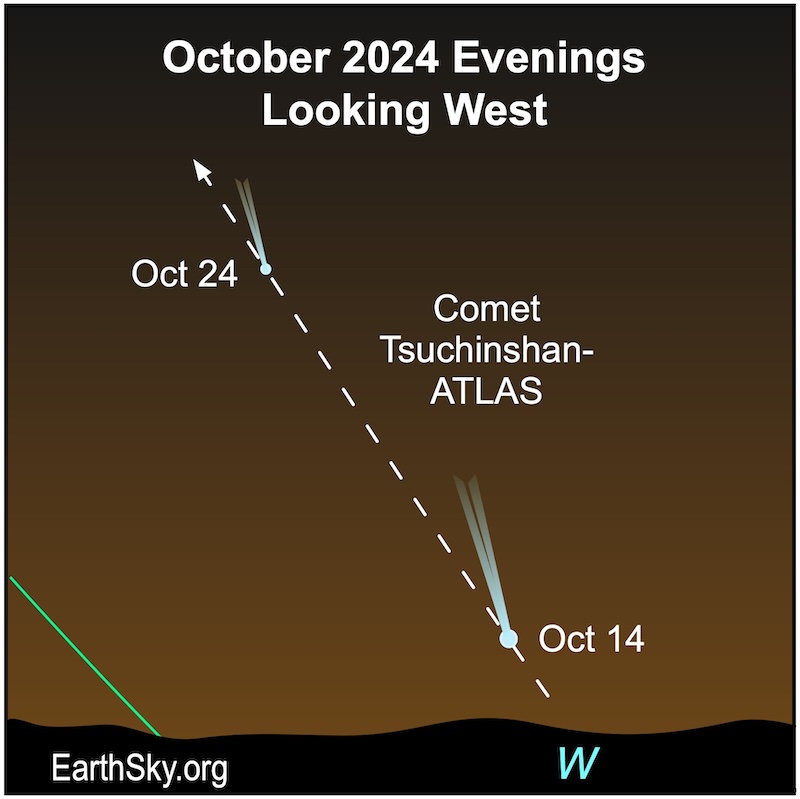
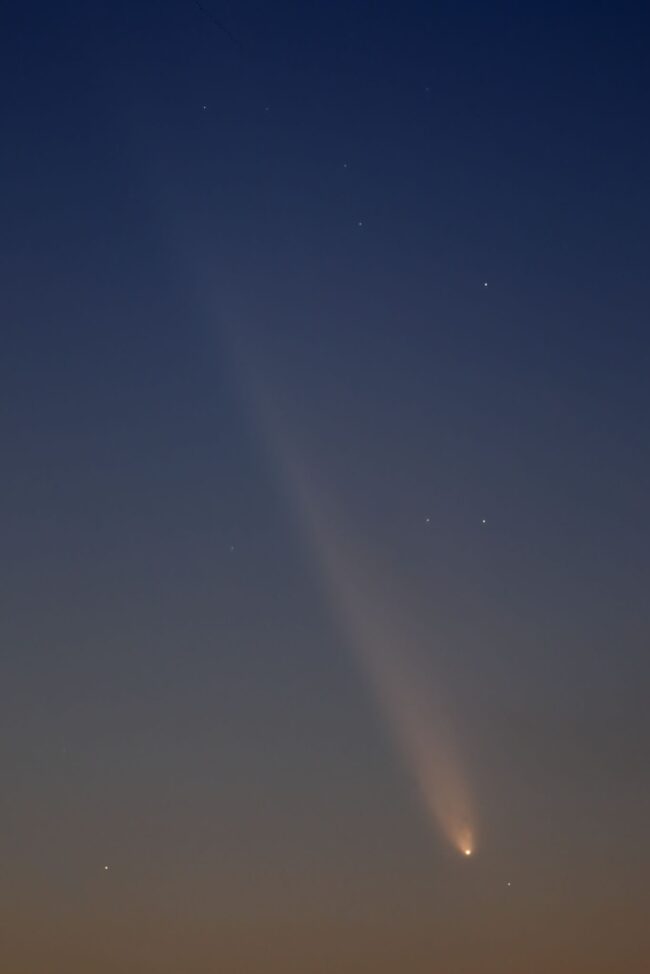
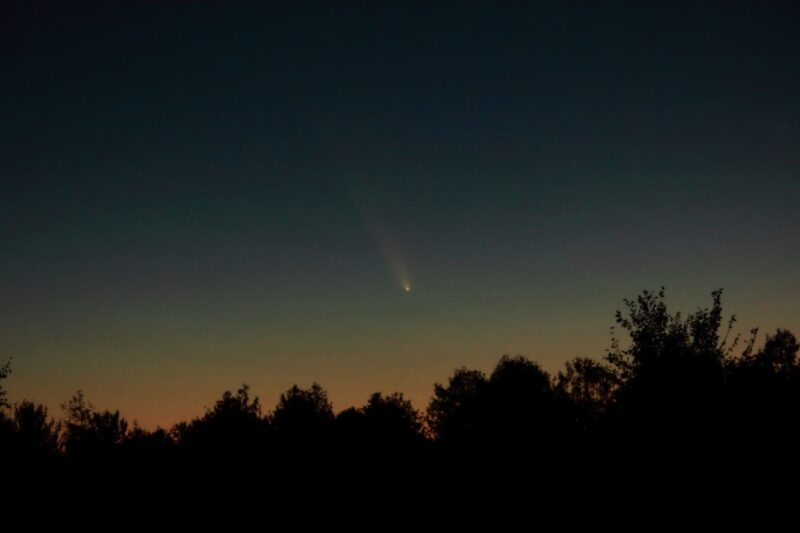
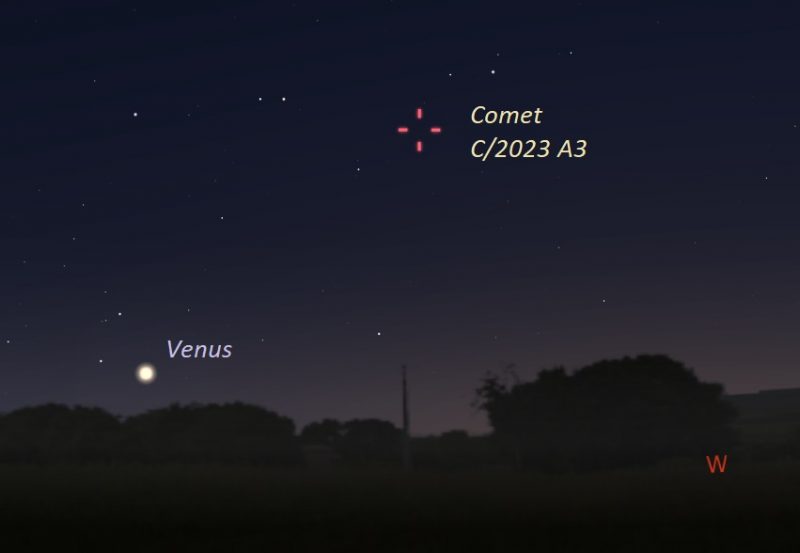
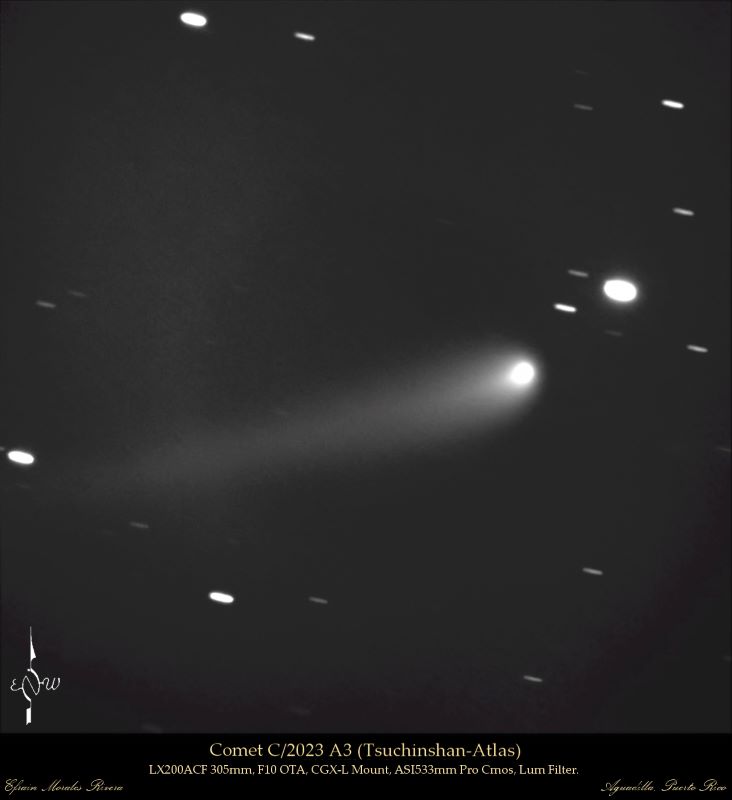
Here’s a chart, plus some images from people who caught it last night, on the day of the comet’s closest approach to Earth.

There might be 2 comets in October’s sky
Here’s the lowdown on not one comet – but two comets – possibly visible in Earth’s skies in October and early November 2024. EarthSky’s Deborah Byrd, Marcy Curran and Dave Adalian have you covered! On October 8, astronomers said the 2nd comet, S1, might be disintegrating. More on that here.
Before this, it was in the sun’s direction
The comet was closest to Earth in its orbit yesterday, October 12, 2024. At that time, it was between us and the sun, putting on a heck of a show in solar telescopes. And some people even managed to catch it near the sun. See images below.
What a week. Comet C/2023 A3 Tsuchinshan-ATLAS was the brightest comet since P1 McNaught to cross the view of SOHO’s LASCO C3 imager this past week… and the show’s not over. Starting this weekend, the comet begins its encore presentation, appearing low to the west at dusk. pic.twitter.com/nPtwz8MckY
— Dave Dickinson (@Astroguyz) October 11, 2024


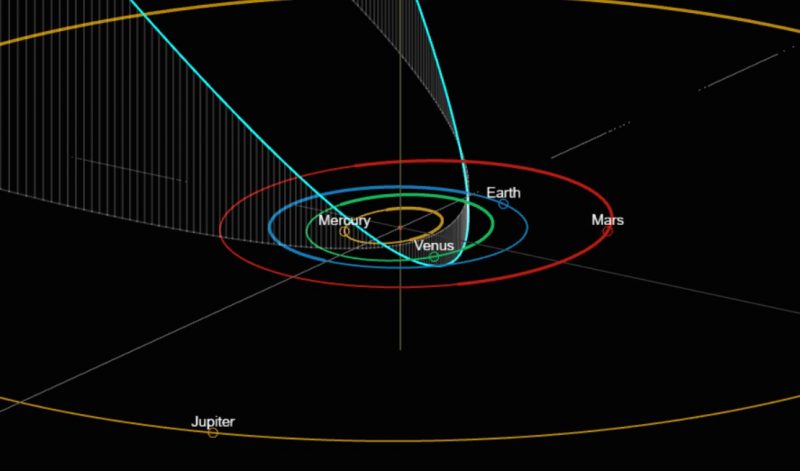
Comet A3’s orbit around the sun
Comet A3 in early October 2024
Comet C/2023 A3 (Tsuchinshan–ATLAS) reached perihelion, or its closest point to the sun, on September 27, 2024.
You can start looking as early as October 11, but from around October 14, Comet A3 will be easier to spot. The charts below show the comet’s location from around October 14 and following evenings. The comet’s great speed will cause it to appear noticeably higher in the western sky from one night to the next.
In late October, Comet A3 will pass rapidly in front of a series of constellations, including Serpens Caput and into Ophiuchus.
See our community photo gallery of the comet! It’s amazing.
How bright? How easy to see?
Comets are unpredictable. And there’s no way to know at this time exactly how bright any comet will become. But preliminary estimates suggest that Comet A3 might grow as bright as magnitude 2.5 to 2 during closest approach to Earth on October 12. Or maybe even slightly brighter if we are lucky (or fainter if we’re unlucky), since comet behavior is so difficult to predict.
So Comet A3 isn’t going to be a Comet of the Century. But if it continues to perform well, it might be the brightest comet of the year … except for one other possibility.
Two bright comets in October?
There is a second comet in Earth’s skies that might become bright, if it’s not disintegrating. The ATLAS telescope also discovered Comet C/2024 S1 (ATLAS). It’s what’s known as a sungrazer. It was first given the designation of A11bP7I, but now it’s officially C/2024 S1 (ATLAS) … or Comet S1 for short. Predictions for the comet had it reaching as bright as magnitude -5 to -7 around October 28. But on October 8, astronomers reported it might be breaking up. Read more about its rumored disintegration here.
Helpful tips to spot a comet
1. Be sure you’re looking at the correct direction and time. Comet A3 will be visible low in the west after sunset beginning around October 14. Comet S1, if it holds together, will be visible in late October to early November, low in the east before sunrise.
2. You need a dark, unobstructed sky. Start looking when the sky is dark, but close to sunrise or sunset. Make sure there aren’t hills, trees or buildings blocking your view.
3. If you can’t see the comet with your eye, try your phone. Most cell phone cameras provide a night or low-light mode. But capturing an image of the comet will require that you hold the camera firmly – or lean against a fixed object like a tree – to avoid shaky or blurred images. Try taking a few pictures facing west after sunset (for Comet A3) or east before sunrise (for Comet S1). These images accumulate the light for a few seconds, so you might be able to catch the comet in your images, even if you can’t see it with the eye.
4. AFTER you’ve located the comet, use binoculars or your eyes to sweep in that area in the sky. You might discover that, in fact, you can see both the comet and its tail with your eye alone.
5. If you see it, try taking your own measurements of the comet’s tail. For example, if you take a good look through a pair of binoculars that has a 5-degree field of view, and you can see the tail extending about 3/5 of that field, you’re seeing around 3 degrees of the tail. And that means you are seeing with your own eyes a cometary tail that looks as long as six moon diameters!


A speedy ball of ice and dust
Comet Tsuchinshan-ATLAS is blazingly speedy. It’s tearing through the inner solar system at 180,610 miles per hour (290,664 kph) or 80.74 km per second relative to Earth. With a small telescope, you can actually see its amazing speed. You can watch the comet’s location gradually change by comparing its exact position against background stars just 15 minutes later.
Comet A3 Tsuchinshan-ATLAS’s disintegration rumors
Comet A3 Tsuchinshan-ATLAS hasn’t been acting as people expected it to. As it was approaching the inner solar system in early 2024, it wasn’t brightening as much as expected. And then a study suggested the cometary nucleus was fragmenting.
The paper’s author, Zdenek Sekanina, a Czech-American astronomer and comet expert at NASA’s Jet Propulsion Laboratory, said, on July 8, 2024, that the comet entered an advanced phase of fragmentation. He said the end of Comet Tsuchinshan-ATLAS was inevitable.
However, comets are notorious for being erratic and unpredictable. And this one proved to be as well.
Discovery and naming
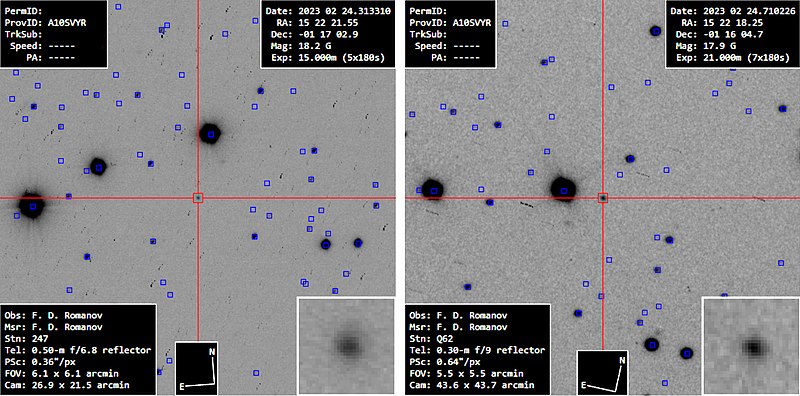
The Asteroid Terrestrial-impact Last Alert System (ATLAS) telescope in South Africa discovered Comet C/2023 A3 on February 22, 2023. Additionally, observers at Purple Mountain (Zijin Shin or Tsuchinshan) Observatory in China found the comet independently on images from January 9, 2023. Therefore, the comet also has the nickname Tsuchinshan-ATLAS.
At discovery, the comet was still 7.3 astronomical units (AU) from the sun, and shining at a dim magnitude of 18.
Preliminary analysis of its trajectory suggests Comet A3 completes an orbit around the sun every 80,660 years.
Comet A3 in social media
This is an absolutely amazing simulation of the behavior of Comet C/2023 A3 (Tsuchinshan-ATLAS) by @nlefaudeux ? #Comet #Astronomy #TsuchinshanATLAS #Cometa #CometC2023A3 #Tsuchinshan #C2023A3 #FollowTheComet pic.twitter.com/lpAWezXzp4
— Yuri Beletsky (@YBeletsky) September 27, 2024
Getting up at 4am to see Comet Tsuchinshan-ATLAS rising over the Toowoomba range
— George Zhou (@georgezhouastro.bsky.social) September 22, 2024 at 3:54 PM
Comet C/2023 A3 (Tsuchinshan-ATLAS) is finally here ! ???I captured this image this morning at 09:22 UTC from @LCOAstro in Atacama desert in Chile ?? The view was absolutely spectacular ! The clouds were constantly moving just above the horizon, but we got really lucky when the… pic.twitter.com/AoClHkatFr
— Yuri Beletsky (@YBeletsky) September 24, 2024
So far Comet Tsuchinshan-ATLAS looks like a fuzzy star to the naked eye looking out the cupola windows. But with a 200mm, f2 lens at 1/8s exposure you can really start to see it. This comet is going to make for some really cool images as it gets closer to the sun. For now a… pic.twitter.com/JstaSLJ4Ui
— Matthew Dominick (@dominickmatthew) September 19, 2024
It’s already possible to barely see the Comet C/2023 A3 (Tsuchinshan-ATLAS) from northern locations but faint and very very low over the horizon.
Inages:
Left: 21/9/24 by Val Italo from Atlanta, USA
Right: 22/9/24 from Canary Islands by Frank A. Rodríguez @AstroEduca pic.twitter.com/Kh1WqDhx5K— Xavi Bros (@Xavi_Bros) September 23, 2024
Bottom line: Would you like to see Comet A3 Tsuchinshan-ATLAS in the evening sky? Get tips and star charts here. If you catch an image of it, submit it to us!
Source: Inevitable Endgame of Comet Tsuchinshan-ATLAS (C/2023 A3)
The post Want to see Comet A3? It’s back! West after sunset first appeared on EarthSky.